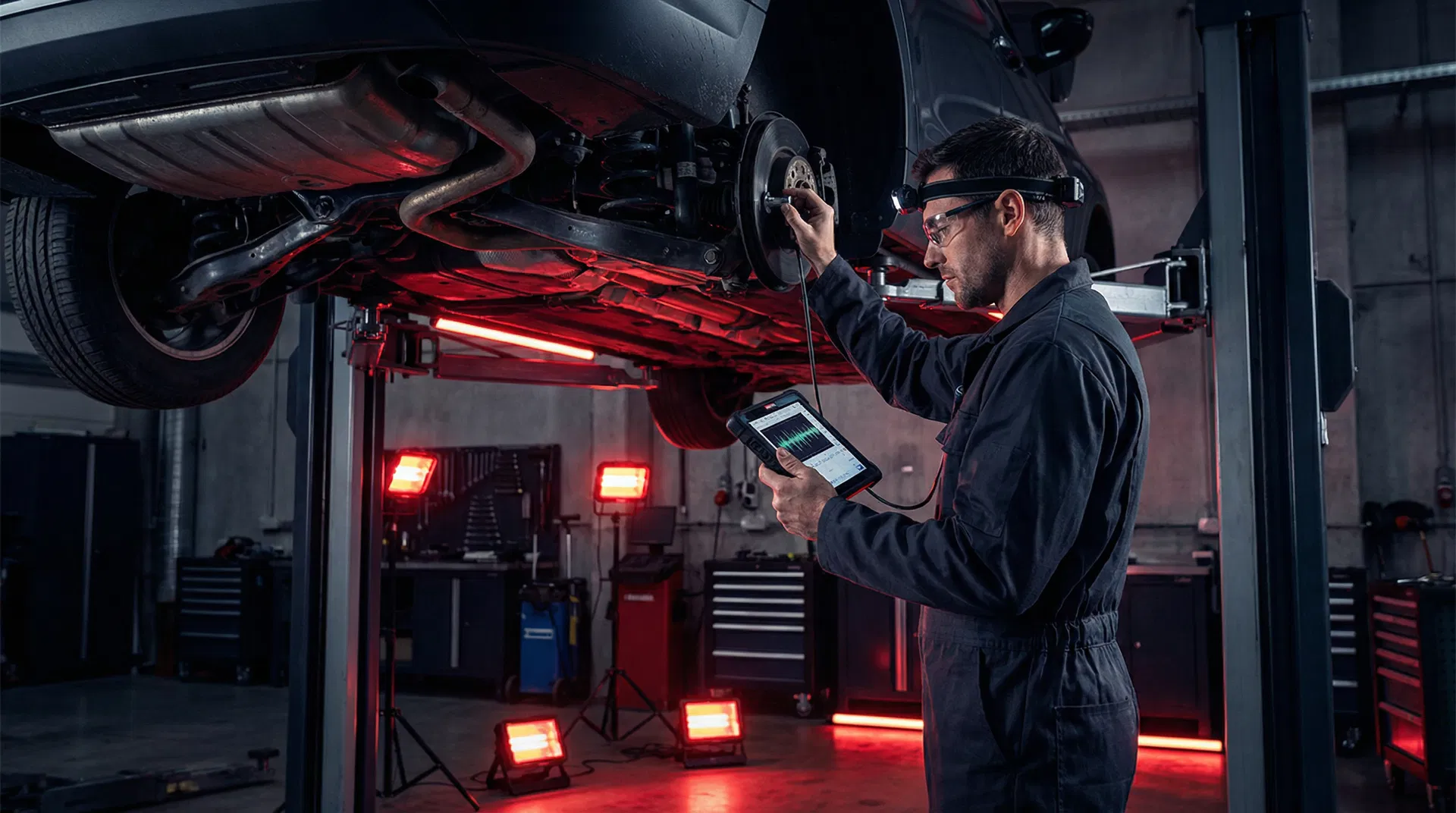
How to Choose the Right Chassis Noise Detection Equipment for Your Auto Workshop
Chassis noise is one of the most common and frustrating complaints in auto repair. The right detection equipment can cut diagnosis time by 70% and dramatically improve customer satisfaction. Here's what to look for.
Chassis noise complaints account for a significant portion of workshop visits worldwide. Whether it's a clunking suspension, worn bushings, or a failing shock absorber, pinpointing the source of the noise manually is time-consuming, imprecise, and often leads to unnecessary parts replacement. Professional chassis noise detection equipment changes all of that.
Why Traditional Methods Fall Short
Experienced mechanics have long relied on road tests, lift inspections, and rubber mallets to locate chassis noise. While these methods work to a degree, they have serious limitations. Road tests are subjective and difficult to reproduce. Lift inspections remove the vehicle's weight load, which can mask the very conditions that cause the noise. And mallet tests are imprecise at best.
The result? Misdiagnosis, repeat visits, and frustrated customers who feel their money was wasted.
What Modern Chassis Detection Equipment Offers
Professional chassis noise detection systems simulate real driving conditions while the vehicle is stationary. The key capabilities to look for include:
High Load Capacity — A quality chassis dynamometer should handle at least 3,000 kg per axle. LONSAUTO's ZC-3511 supports up to 5,000 kg, accommodating everything from compact cars to full-size SUVs and light commercial vehicles.
360° Rotation Capability — Noise often only manifests at specific steering angles. Equipment with full rotational capability allows technicians to replicate turning conditions and isolate directional noise sources with precision.
Vibration Simulation — Road surface irregularities cause vibrations that trigger chassis noise. Look for equipment that can simulate different road textures and speeds to reproduce the exact conditions the customer describes.
Simultaneous Multi-Axle Testing — Testing front and rear axles simultaneously cuts inspection time in half compared to sequential testing.
Key Specifications Comparison
| Feature | Basic Models | Mid-Range | LONSAUTO ZC-3511 |
|---|---|---|---|
| Max Load per Axle | 2,000 kg | 3,500 kg | 5,000 kg |
| Rotation Range | ±15° | ±30° | 360° Full |
| Vibration Simulation | No | Basic | Multi-frequency |
| Simultaneous Axle Test | No | No | Yes |
| Digital Data Output | No | Basic | Full report |
ROI Considerations for Workshop Owners
The investment in professional chassis detection equipment pays back quickly. Consider these numbers: a typical chassis noise diagnosis using traditional methods takes 45–90 minutes. With professional detection equipment, the same diagnosis takes 15–20 minutes. For a workshop handling 8 chassis complaints per week, that's 4–6 hours of recovered technician time weekly — enough to service 2–3 additional vehicles.
Beyond time savings, accurate diagnosis reduces parts waste. Workshops report up to 40% reduction in unnecessary parts replacement after adopting professional detection equipment, directly improving profitability.
Choosing a Reliable Supplier
When evaluating suppliers, prioritize manufacturers with ISO certification, proven export experience, and after-sales support. LONSAUTO has over 20 years of manufacturing experience, holds ISO 9001:2015 certification, and exports to more than 10 countries. Our chassis series equipment comes with full technical documentation, training support, and a comprehensive warranty.
Investing in the right chassis noise detection equipment is not just a purchase — it's a commitment to diagnostic excellence that your customers will notice and reward with repeat business.
Interested in LONSIS Equipment?
Contact us via WhatsApp for pricing, demos, and personalized recommendations.
Chat on WhatsApp